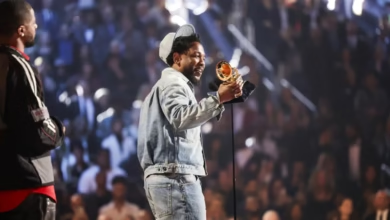
“I Use Juju to Succeed” — Fuji Star Saheed Osupa Sparks Controversy

“I Use Juju to Succeed” — Fuji Star Saheed Osupa Sparks Controversy
Popular Fuji musician Saheed Osupa has ignited widespread debate after a statement attributed to him suggested that he uses “juju” as part of his success formula, drawing mixed reactions from fans, critics, and cultural commentators.
The veteran artiste, who has built a decades-long reputation in Nigeria’s indigenous music scene, reportedly made the remark during a recent interview. Since then, the statement has gone viral across social media platforms, with many Nigerians weighing in on what exactly the singer meant and whether his words should be taken literally or symbolically.
For some supporters, the comment is being misunderstood. They argue that in the context of Nigerian entertainment, references to “juju” are often figurative, used to describe confidence, personal discipline, spiritual belief, or even the cultural mystique that surrounds an artist’s craft. To them, Saheed Osupa was likely speaking in a metaphorical sense, consistent with how performers sometimes frame their journey to success.
Others, however, have expressed concern over the implications of such a statement, particularly given the influence celebrities wield. Critics warn that comments linking success to supernatural means could send the wrong message to young fans, potentially discouraging hard work and reinforcing myths about the entertainment industry. Some have also called for public figures to be more cautious with their words, especially in an era where statements can quickly spread and be misinterpreted.
The controversy has once again brought to the forefront the complex relationship between tradition and modernity in Nigeria’s creative space. Fuji music itself is deeply rooted in Yoruba culture, where elements of spirituality, folklore, and traditional expression often intersect with contemporary storytelling. As such, artists like Saheed Osupa frequently navigate a delicate balance between preserving cultural identity and appealing to a modern, diverse audience.


As discussions continue to trend online, the singer has yet to release an official clarification regarding the remark. Whether intended as a literal claim or a figurative expression, the statement has undeniably sparked a broader conversation about belief systems, cultural language, and the responsibility that comes with fame in Nigeria’s entertainment industry.