NASA Orders Emergency Shelter for Astronauts as ISS Air Leak Worsens
Five crew members were placed on evacuation standby for nearly two hours as engineers raced to contain a growing air leak aboard the International Space Station.
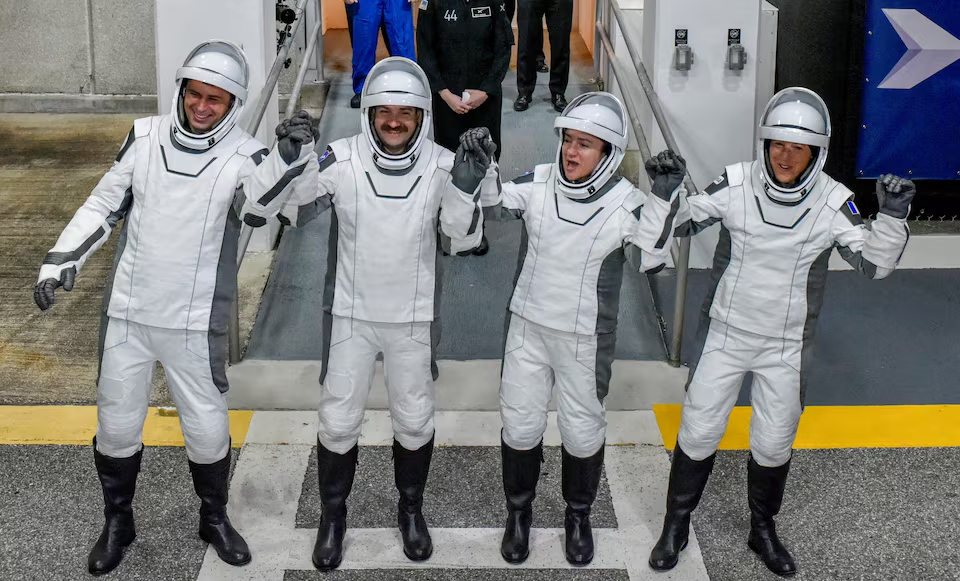
A worsening air leak aboard the International Space Station (ISS) prompted NASA to place five astronauts on emergency standby for possible evacuation on Friday, as Russian engineers worked to repair a crack in a section of the orbiting laboratory.
According to NASA, mission control instructed the four members of the Crew-12 mission two American astronauts, one French astronaut, and one Russian cosmonaut along with another U.S. astronaut, to take shelter inside their docked SpaceX Crew Dragon spacecraft at approximately 9:04 a.m. ET. The precautionary measure remained in effect for nearly two hours before NASA cleared the astronauts to return to normal station operations.
The move followed concerns over an increase in the rate of air leakage from Russia’s Zvezda service module, a critical component of the ISS. NASA and Russia’s space agency, Roscosmos, have been investigating recurring leaks in the module for several months.
Roscosmos reported that two leaks had been identified. One was quickly sealed, while efforts continued to repair the second. The agency stressed that there was no immediate danger to the crew or the station’s systems.
A NASA official said the leak rate had doubled on Friday, rising from about one pound of air loss per day to two pounds, triggering heightened safety concerns.


The ISS currently hosts seven astronauts. The Crew-12 team NASA astronauts Jessica Meir and Jack Hathaway, European Space Agency astronaut Sophie Adenot, and Roscosmos cosmonaut Andrey Fedyaev arrived in February. They are joined by NASA astronaut Christopher Williams and Russian cosmonauts Sergey Kud-Sverchkov and Sergei Mikayev, who arrived in November.
NASA reportedly disagreed with a proposed Roscosmos repair method involving cutting into an area believed to contain the crack, leading Houston-based mission control to initiate safe-haven procedures. The order was later lifted after Roscosmos paused the repair attempt.
NASA spokesperson Bethany Stevens said both agencies would continue working together to resolve the issue, emphasizing the importance of a collaborative approach.
Safe-haven procedures are rarely activated aboard the ISS and are typically reserved for serious risks such as potential collisions with space debris or significant air leak concerns. No crew has ever been forced to evacuate the station during its 27-year operational history.
READ ALSO: 358 days on Red Planet’: NASA volunteers set to return from Mars
Meanwhile, U.S. lawmakers are considering legislation that would extend the ISS’s lifespan from 2030 to 2032, allowing additional time for commercial partners to develop successor space stations. The proposal has bipartisan support and is part of broader efforts to maintain U.S. competitiveness in space exploration amid China’s expanding presence in orbit.
Reuters